

Workplace advice rarely begins with the brutal murder of innocent children.
Perhaps it should.
By the year 602 CE, the Roman Empire of Byzantium was thriving in Egypt and North Africa, Anatolia and the Levant, Greece & the Balkans. Emperor Maurice had ruled successfully for many years, and he was devoted to his wife and large family. He had settled wars, improved laws codes. His five sons were well trained and ready to assume command when he passed.
But in the winter of that year, Maurice made a financial decision that would cost him everything. His army was exhausted after years of fighting Avars and Slavic tribes north of the Danube. Supplies were thin and the winter was brutal. Byzantine tradition dictated that the troops should return home to their families and farms.
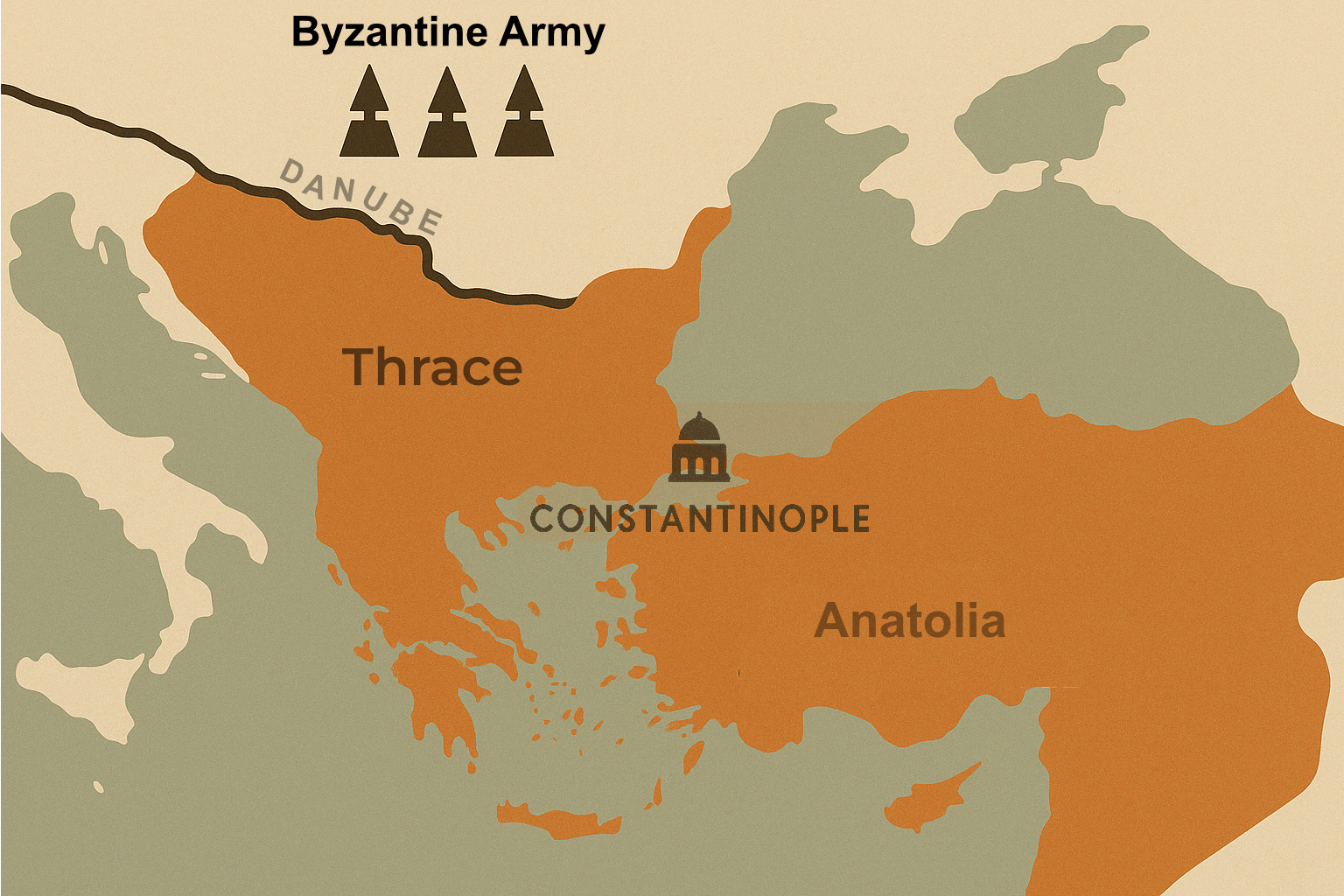
But Maurice ordered them to stay. The treasury was depleted by the lengthy and ongoing wars to the north and with the Persians to the east. To cut costs, he halted supply shipments and delayed payments. He remained in Constantinople, far from the frozen camps.
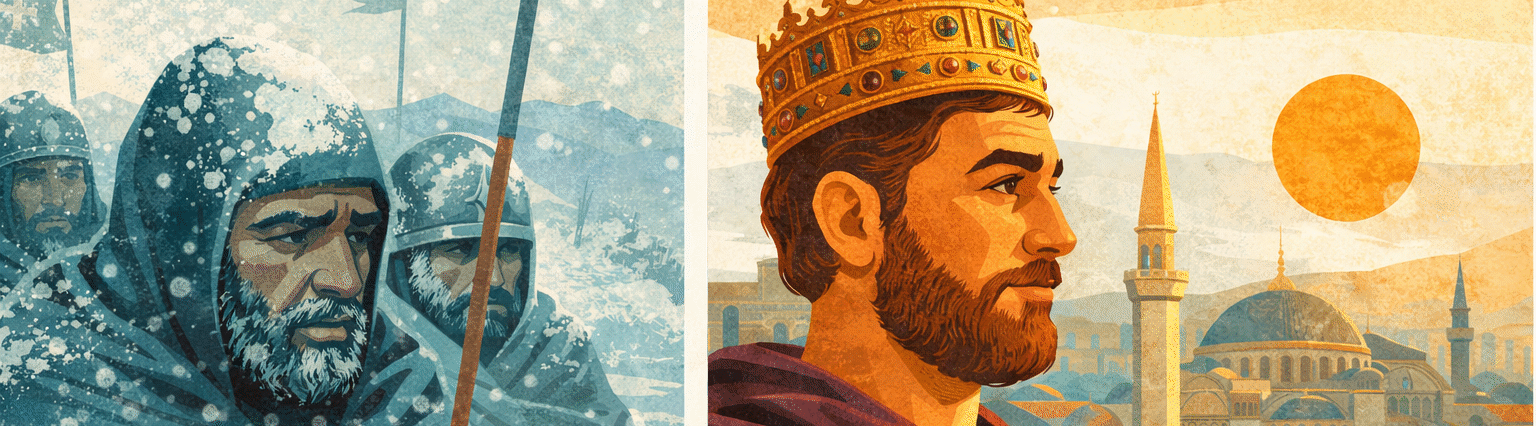
A low-ranking officer named Phocas rallied the starving troops from their winter camps. His mutiny turned to revolution as they marched south to Constantinople. Maurice was completely unprepared, because his attention and remaining army were focused on Persian threats to the east. Maurice was easily captured and then paraded around to the jeers of onlookers. He was then forced to watch the execution of his five sons, one by one, before he himself was killed.
Maurice had been one of the greatest of emperors in the 1000-year history of Byzantium. He reformed military law. He stabilized borders. He wrote the Strategikon, a manual that would influence generals for many centuries.
But he violated something older than empire, laws, or tradition. He violated trust.
And that mistake did not begin in 602. It began more than one million years ago.
The Deep Origin of Trust
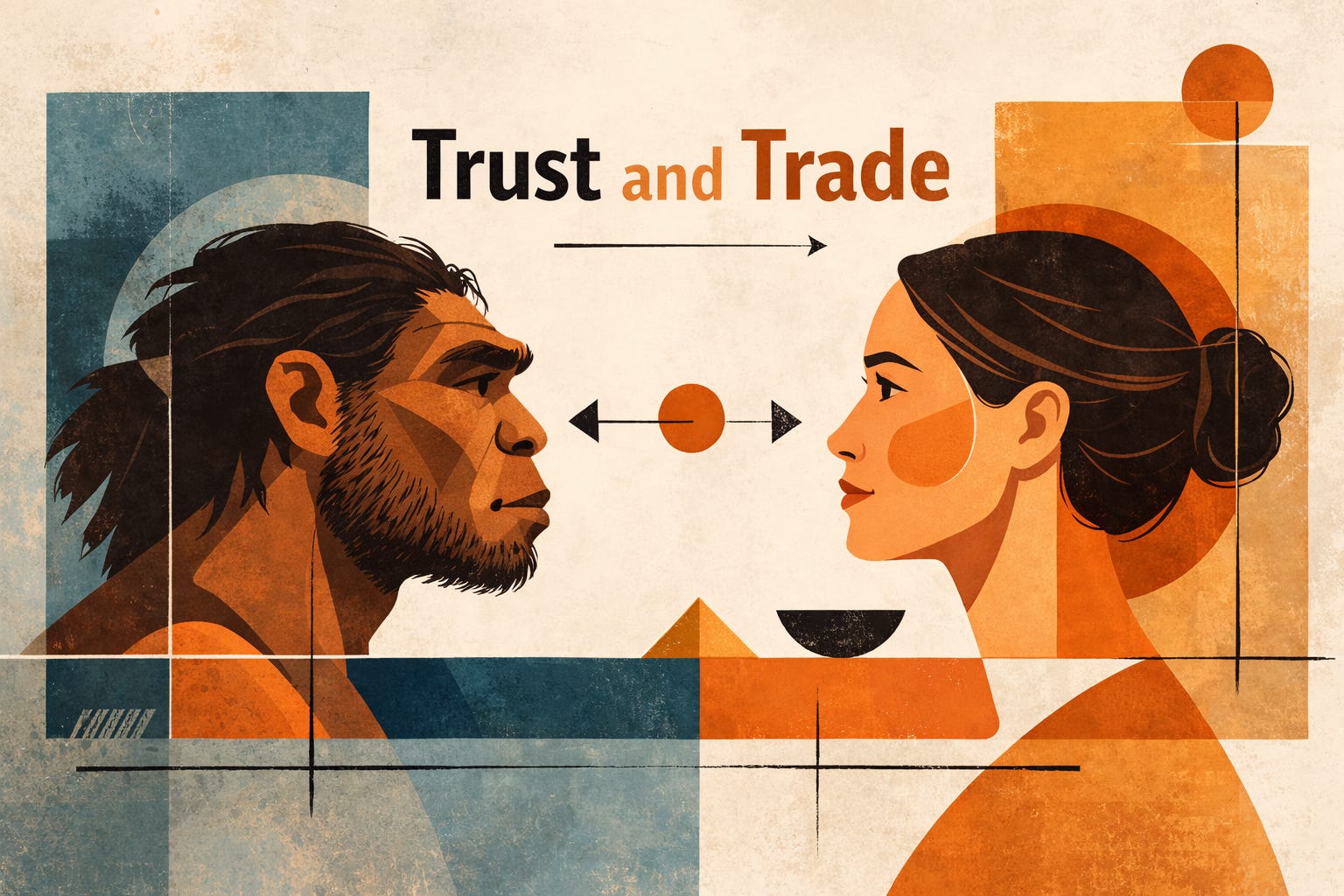
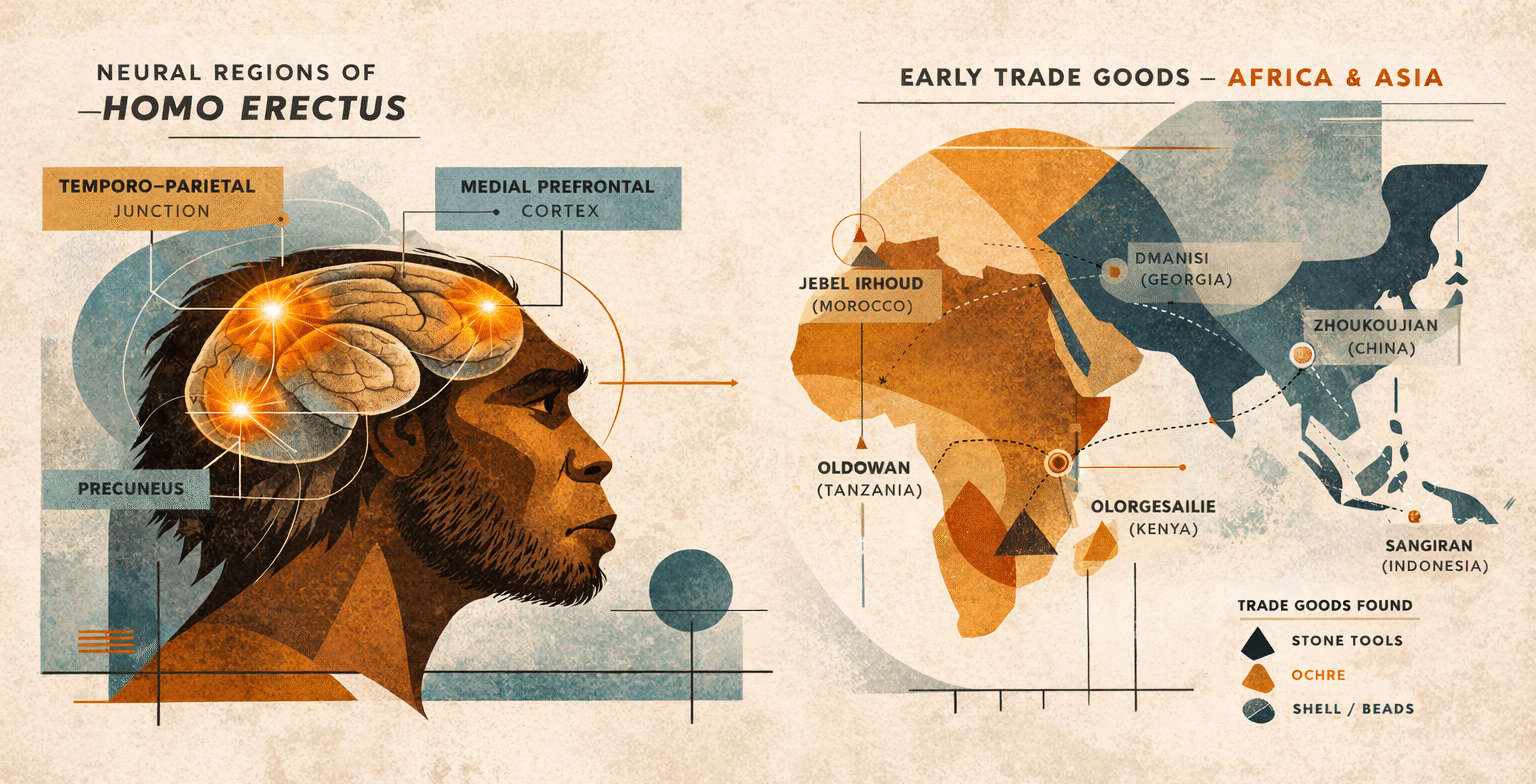
Between 1.5 million and 800,000 years ago, our ancestor Homo erectus began forming long-distance trade networks. Tools, pigments, and crafts moved across landscapes. Groups encountered one another not only in conflict, but in exchange.
Trade requires something dangerous: delayed reciprocity. You give now and trust they will give later. That shift changed everything.
Neural Foundations
To sustain exchange, new neural capacities emerged. The prefrontal cortex supported planning and self-regulation. Temporal and parietal regions supported perspective-taking. Limbic systems integrated emotion with valuation and memory. Together, these systems enabled self-awareness, self-identity, empathy, and a theory of mind.
We should remember that trust behaviors emerged well before true iconic language. For H erectus, learning happened by observation and patterns of repetition. Physical presence of a well-known individual could signal safety. Repeated and good exchanges built a trust & trade network. Bad exchanges signaled an enemy.
Over time, trade cultures would out-compete the smash-and-grab cultures that did not, or could not, participate in exchange networks. Trust & trade became an adaptive advantage, as strong exchange networks could better survive droughts, conflicts, and other threats.
The Four Trust Behaviors
From these deep origins we can extract the four foundational behaviors of trust & trade.
First, know your role. Exchange requires identity and presence. Your partner must recognize who you are and what you contribute.
Second, show authentic empathy. Observe needs. Respond clearly and visibly.
Third, anticipate reactions. Theory of mind allows you to imagine how your exchange will be valued as beneficial.
Fourth, repeat and respect transaction patterns. How, when, and what. Trust is built by consistency and tradition.
These are not soft skills. They are evolved tendencies refined over hundreds of thousands of years. Every soldier in Maurice’s army carried the neural adaptions that could express trust - or distrust.
Maurice Through an Evolutionary Lens
At the critical moment of 602 along the northern banks of the Danube, Maurice failed to show trustful behaviors in the eyes of cold and starving troops.
He was absent, a distant authority rather than a visible partner. He ignored the suffering of his troops and misjudged their likely reaction. He broke longstanding cultural expectations of payment and winter return.
To the army’s evolved social brain, Maurice shifted categories. He moved from trusted partner to villain. Once that reclassification occurs, outcomes change quickly.
The mutiny was political, but the trigger was biological.
Trust in the Modern Workplace
Modern collapses follow similar patterns. When leaders break implicit exchange agreements, show indifference to team stress, disappear from shared experience, or violate established norms, trust erodes rapidly.
Teams fragment. Startups implode. Customers withdraw.
By contrast, organizations that scale trust through transparency, empathy, and consistent exchange expand faster and endure longer. Trust reduces transaction costs. It increases coordination speed. It multiplies creative exchange.
The Foundation Layer
“Trust your gut” is a common expression of business leaders, especially with people-based decisions.
At General Electric, Jack Welch made final hiring decisions, after considering all other available metrics, based on ‘gut feel.’
Warren Buffet describes getting a ‘feel of integrity’ from a manager.
Sheryl Sandberg said, “Your gut tells you something in an interview - don’t ignore it.”
The Working Origins timeline shows why words like gut and feel are synonymous with trust.

Trust behaviors emerged long before we had language, and long before belief systems, agile cultures, agriculture, education, or written laws.
The trust behaviors of Homo erectus remain within us today, but have been modified by many following adaptations. Gut or trust feelings have little value by themselves.
Phocas, the man who killed emperor Maurice, is a good example of the limitations of gut instincts. He was named emperor after Maurice. But Phocas had none of Maurice’s broad leadership skills. He was willful, capricious, harsh with others, and could not maintain lawful order. He quickly alienated court officials, his provincial governors, and potential allies like Khosrow II of Persia. Within two years he had met the same fate as Maurice.
Takeaways
There are four key lessons for our Workplace today.
First is for business leaders. They should ask the questions that Maurice did not. Recognize any durable patterns of trust in the business network of partners, suppliers, customers, and teams. These should be valued and protected. Then ask where trust may be eroding from the friction of broken promises or one-sided exchange.
The second lesson is for each of us. Trust is not just a leadership concern. We build our careers through trust. Promotions, sales, alliances, partnerships, and even hire-fire decisions are shaped by visible patterns of identity, reliability, and mutual gain. Each of us may leverage the biology of trust to strengthen our most valued relationships. Stay present and true to your role. Observe and meet their needs. Maintain a reliable pattern.
The third lesson is that modern business tools amplify both trust and its absence. Video calls, short-form text, chat, AI agents, and labor-saving automation reduce physical presence — one of the oldest trust signals we possess. We must compensate intentionally.
A fourth lesson is that every scam or con exploits the deep origins of trust. They hijack identity, empathy, patterns, and beneficial exchange — instincts that evolved long before contracts or cybersecurity.
That’s it - the Working Origins of Trust & Trade.

In the next post, we’ll move forward along the ESTIMATE timeline to the rise of instruction and iconic language — the adaptation that allowed trust to scale beyond sight and repetition.
Until then, remember the Working Origins motto:
Working together well is the most human thing we ever do.
Underlying Science
As a supplement to this Trust & Trade post, here is an overview of underlying science. As mentioned earlier, Working Origins builds insights using three primary fields.
First is biological science. Paleoanthropology, DNA molecular analysis, the new and emerging paleoproteomics, and other fields give insight to ancient hominins generally, including Homo erectus of 1.5 million to 750 thousand years ago. Additionally, endocasts and reconstructions of fossilized cranial cavities give evidence of H erectus brain growth and neural region development.
Second is archeology. Paleolithic archaeology describes the Oldowan and Acheulean tool industries and Homo erectus cultures. Lithic analysis gives insight to tool techniques, associated skills, and source materials. Cognitive archaeology then infers mental capacities, planning, symmetry, and abstract thinking.
Third are the behavioral sciences. These act as an interdisciplinary bridge—linking material cultures of tools, symbols, and skills to inferred brain function and structure. These include cognitive archaeology, paleoneurology and developmental neurology. Such research guides our understanding of the Homo erectus cultures and behaviors over these long periods of time.